
Almost every long relationship runs into a period where one partner wants more sex and the other wants less. The pattern is so common that the surprise is how rarely couples discuss it directly rather than through hurt.
This is not a guide to a fixed technique. It is a guide to the two or three changes that most often move things forward.
The most useful shift is separating desire from obligation. When the lower-desire partner feels pressure, desire drops further; when the higher-desire partner feels rejected, they push harder. Breaking that loop – through self-care without guilt, non-sexual intimacy, and explicit conversation about what each person actually wants – helps more than any technique.
Why desire differs
Desire is not a stable trait. It moves with:
- Stress and sleep. The most common short-term driver of lower desire.
- Medication. Some antidepressants, hormonal contraceptives and blood pressure drugs affect libido or physical response.
- Life stage. New parenthood, illness, menopause and ageing all shift desire.
- Relationship dynamics. Unresolved resentment suppresses desire faster than almost anything else.
Two people with the same baseline can sit months apart during a hard period. That is not necessarily a permanent problem.
Which pattern are you in?
| Pattern | What it looks like | What usually helps |
|---|---|---|
| Temporarily lower desire | A clear start point (new baby, stress, medication) | Time, sleep, medical review |
| Spontaneous vs responsive desire | One wants sex suddenly; the other needs warm-up | Different approach to initiation, not more pressure |
| Different baseline | Long-standing, stable difference | Explicit agreement on frequency and autonomy |
| Avoidance | One partner avoids all physical contact | Relationship counselling rather than technique |
The pressure-rejection loop
The loop runs like this: the higher-desire partner initiates; the lower-desire partner feels pressured and declines; the first partner feels rejected and initiates more; the second retreats further.
Both people end up hurt, and neither is behaving badly. The loop is maintained by interpretation, not intention.
The initiation gap
Many couples disagree less about how often they have sex than about who starts it. If one person initiates almost every time, both partners can feel badly – one responsible for rejection, the other responsible for making it happen.
Practical fixes:
- Alternative initiation signals. Explicit advance signals (“tonight?”) reduce the sting of a direct decline.
- Rotate who initiates when the difference is moderate.
- Agree that no is about the moment, not the person. This sounds trite until it is said out loud in a calm moment.
What actually helps
- Talk outside the bedroom and outside the heat of the moment. A neutral time, no ask attached.
- Name the loop, not the person. “I notice we keep getting stuck here” is easier to hear than “you never want me”.
- Restore non-sexual physical contact. If every touch is loaded with expectation, touch stops feeling safe.
- Make room for solo pleasure without guilt. A higher-desire partner who can take care of themselves has less pressure to put on the relationship.
- Address medical causes. Sleep, thyroid, medication side effects and hormonal changes are worth checking with a clinician.
A wand is the least prescriptive toy a couple can own
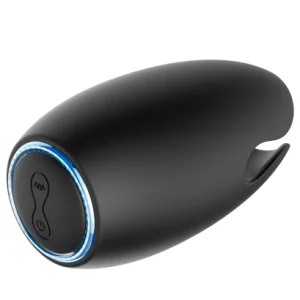 LJ008 Multi-Mode Massager / Vibrator – Rechargeable WandWand – $82 Original price was: $123.00.$82.00Current price is: $82.00.View →
 QN011 Multi-Mode Massager / Vibrator – Rechargeable WandWand – $94 Original price was: $141.00.$94.00Current price is: $94.00.View →
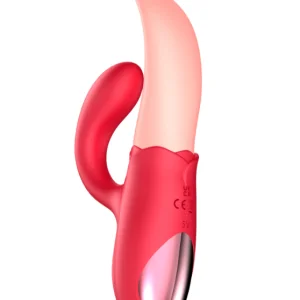 SW004 Multi-Mode Massager / Vibrator – Rechargeable WandWand – $58 Original price was: $87.00.$58.00Current price is: $58.00.View →
Where toys fit, and where they do not
Toys help when they remove pressure. They hurt when they are presented as a solution to a partner problem.
The same toy, two very different messages
| Framing | What it communicates | Outcome |
|---|---|---|
| Let us try something new together | Curiosity, shared play | Usually positive |
| This will help you want more | You are the problem | Usually defensive |
| I would like to use this on my own | Autonomy, honesty | Usually positive |
| I bought this because we are failing | Verdict | Usually negative |
When to bring in a professional
Consider a couples or sex therapist when:
- the loop has persisted for months despite honest conversations;
- one partner avoids all physical contact;
- there is resentment, contempt or coercion in either direction;
- a medical cause is suspected but unresolved.
A therapist is not a last resort. It is usually faster than years of repeating the same conversation.
Frequently asked questions
Is a mismatched libido normal?
Very. Sustained exact matches in desire are the exception rather than the rule, and desire normally fluctuates with stress, sleep, medication, life stage and health. The difficulty is rarely the difference itself – it is how couples interpret it.
How often should a couple have sex?
There is no medical norm. Couples do best on whatever frequency both partners feel comfortable with. The number matters far less than whether both people feel respected.
Can toys fix a mismatched libido?
No, and treating them as a fix tends to backfire. Toys help when they remove pressure or add novelty. They do not replace communication.
 PQ013 Multi-Mode Massager / Vibrator – Rechargeable Wand Original price was: $132.00.$88.00Current price is: $88.00.QN011 Multi-Mode Massager / Vibrator – Rechargeable Wand Original price was: $141.00.$94.00Current price is: $94.00.LJ008 Multi-Mode Massager / Vibrator – Rechargeable Wand Original price was: $123.00.$82.00Current price is: $82.00.